
What Bad Tenant Reviews Really Say About a Property Management Company
In today’s world, every property management company has online reviews. Some are glowing. Some are fair. And some are written by frustrated tenants who are angry about late fees, lease violations, denied applications, collections, inspections, or enforcement of the lease agreement.
As property owners, it is important to understand something:
A property management company that has *zero* negative tenant reviews may not actually be protecting your investment.
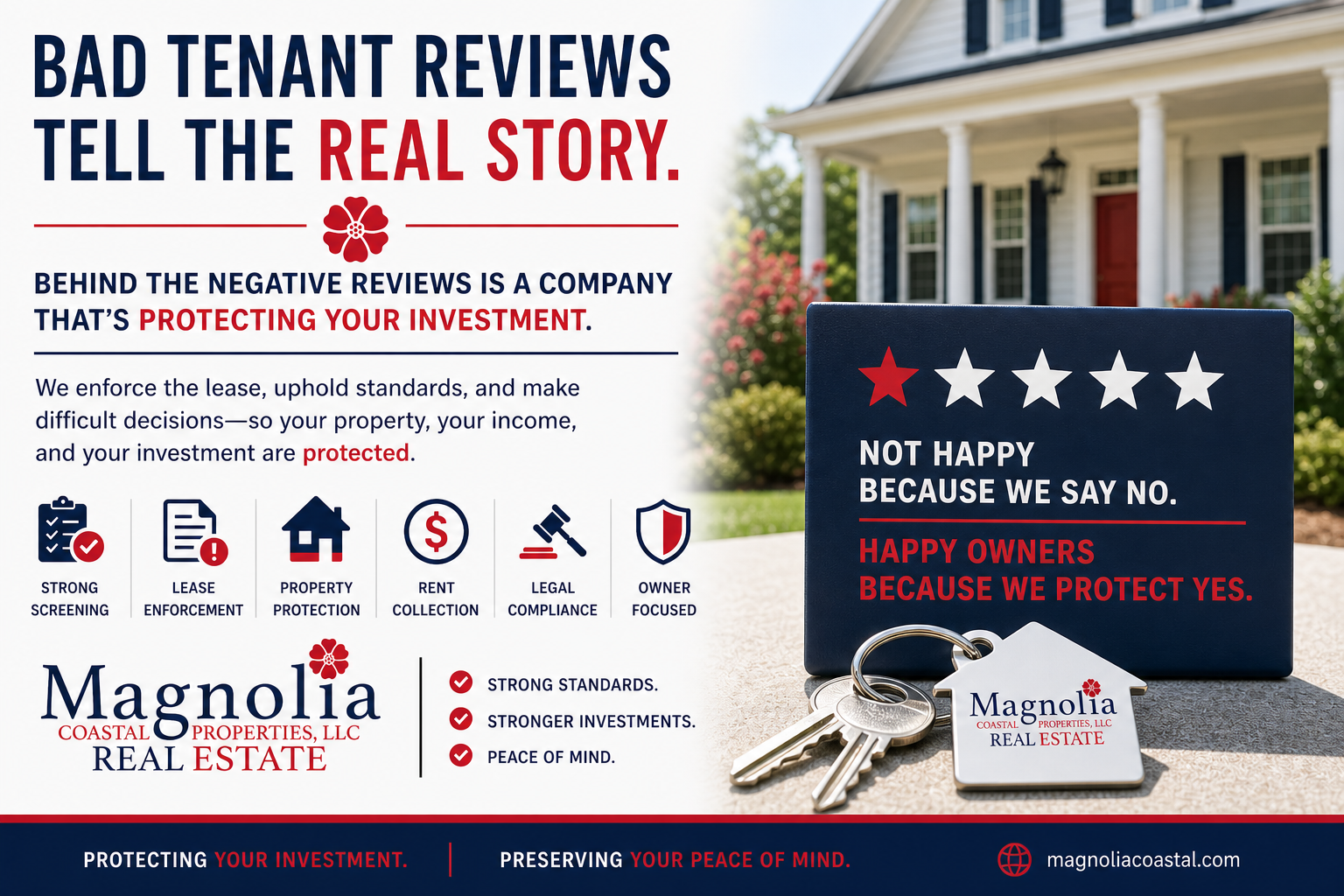
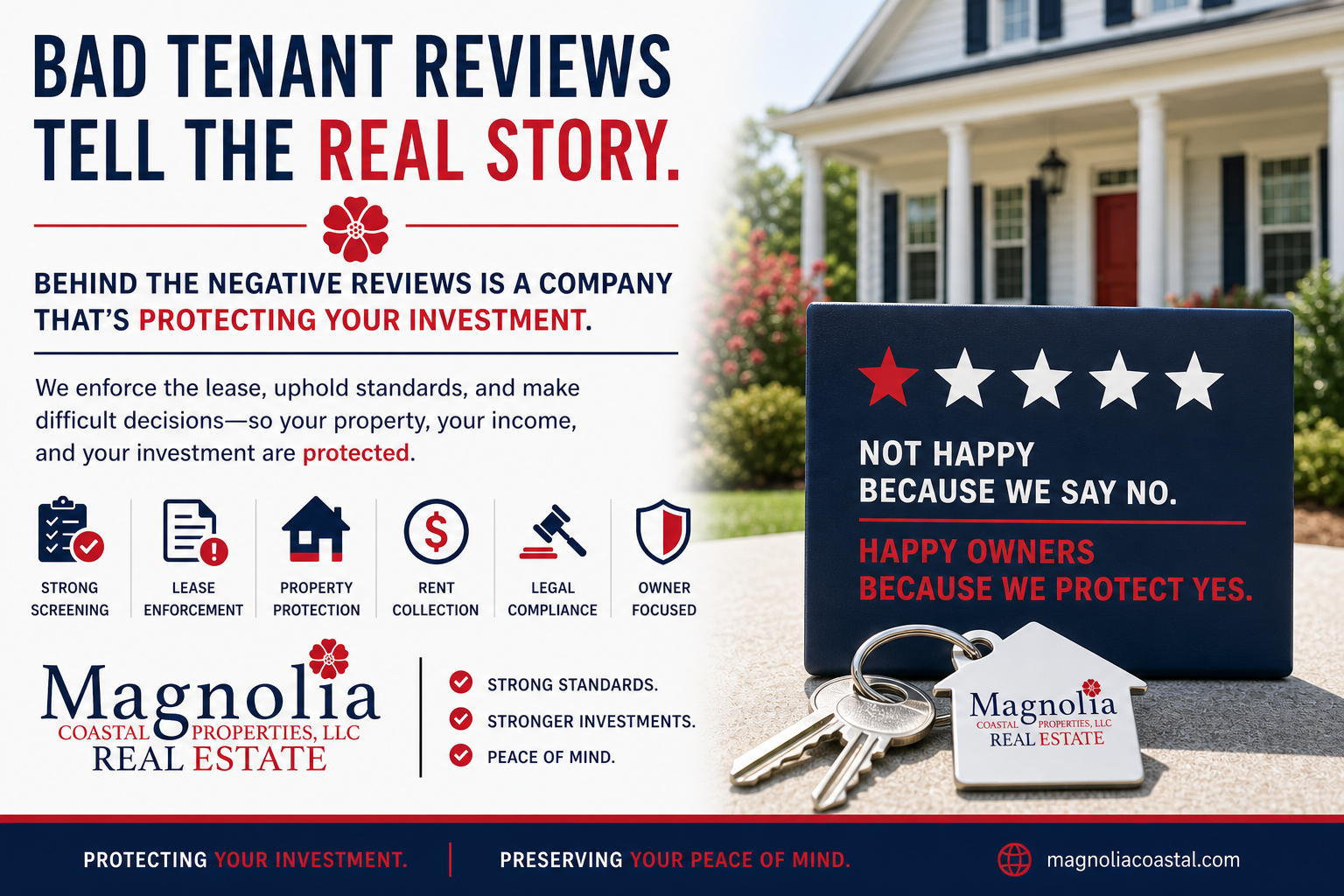
At Magnolia Coastal Properties, we believe bad tenant reviews often tell the real story — the story of a company that is willing to enforce standards, protect owners, and operate professionally even when those decisions are unpopular.
The Best Property Managers Are Not Always the Most “Liked”
There is a major difference between:
* Being liked by every tenant
* Properly managing investment property
Good property management requires difficult conversations and consistent enforcement.
That means:
* Charging late fees when rent is not paid
* Filing notices when lease terms are violated
* Denying applicants that do not meet screening standards
* Holding tenants accountable for damages
* Enforcing HOA rules
* Following Georgia landlord-tenant law
* Protecting owner funds and property condition
Many negative reviews stem directly from these situations.
A tenant who is being held accountable will rarely leave a five-star review saying:
“This company enforced the lease exactly as they should have.”
Instead, they may complain that management is “strict,” “unfair,” or “hard to deal with” simply because rules and lease obligations were enforced consistently.
Strong Screening Protects Owners — Even If Applicants Get Upset
One of the most common sources of negative reviews in property management comes from denied applications.
At Magnolia Coastal Properties, we maintain screening standards because owners deserve qualified tenants who can financially uphold the lease.
That includes evaluating:
* Credit history
* Income verification
* Rental history
* Background information
* Debt obligations
* Risk factors
Applicants who are denied often feel frustrated. But protecting owners from high-risk placements is one of the most important responsibilities a professional property manager has.
A company approving everyone just to fill vacancies quickly may create bigger financial problems later through:
* Evictions
* Property damage
* Non-payment
* Excessive turnover
* Lease violations
Lease Enforcement Is Part of Protecting Property Value
Professional management is not simply collecting rent.
A strong management company protects the long-term condition and value of the investment.
That means enforcing:
* Unauthorized pet restrictions
* Smoking prohibitions
* Occupancy limits
* Maintenance responsibilities
* HOA compliance
* Move-out standards
When tenants violate lease terms and are held accountable, negative reviews often follow.
But from an owner perspective, that enforcement matters.
Without it:
* Deferred maintenance increases
* Neighborhood reputation declines
* HOA violations escalate
* Property condition deteriorates
* Future tenant quality decreases
Bad Reviews Often Mean the Company Says “No”
Many tenant complaints come from situations where management refused requests that violated the lease or owner instructions.
Examples include:
* Refusing to waive late fees
* Declining unauthorized lease changes
* Not allowing deposits to be applied toward rent
* Charging for tenant-caused damages
* Enforcing required notice periods
* Following legal timelines for move-outs and security deposits
A property manager’s job is not to avoid conflict at all costs.
Their job is to balance professionalism, fairness, legal compliance, tenant communication, and owner protection.
Sometimes that means saying “no.”
Owners Should Read Reviews Carefully
Instead of only looking at the star rating, owners should ask:
What are tenants actually complaining about?
If reviews consistently mention:
* Lease enforcement
* Collections
* Late fees
* Application denials
* Strict policies
* HOA enforcement
* Security deposit deductions
…that may actually indicate the company is actively managing the property instead of operating passively.
On the other hand, reviews mentioning:
* Failure to complete maintenance
* Mishandling funds
* Poor accounting practices
…are much more concerning from an ownership perspective.
There is a difference between:
* A tenant upset about accountability
and
* A company failing operationally
Protecting Investments Requires Structure
At Magnolia Coastal Properties, our responsibility is to protect the owner’s investment while remaining professional and compliant with Georgia law.
That means:
* Consistent lease enforcement
* Thorough documentation
* Structured procedures
* Proper inspections
* Clear communication
* Financial accountability
* Professional vendor coordination
* Risk management
Not every tenant will appreciate those systems in the moment.
But owners often do when:
* Rent is collected properly
* Turnover costs are reduced
* Damages are documented
* Violations are addressed early
* Properties remain in better condition long term
The Bottom Line
A property management company should not be judged solely by whether every tenant leaves happy.
Sometimes the strongest indicator that a company is protecting your investment is the fact that they are willing to enforce standards — even when it generates criticism.
The real question for owners is not:
“Does this company avoid negative reviews?”
The better question is:
“Does this company have the systems, professionalism, and consistency to protect my property when difficult situations arise?”
At the end of the day, effective property management is about stewardship, accountability, and protecting long-term asset value — not popularity contests.